
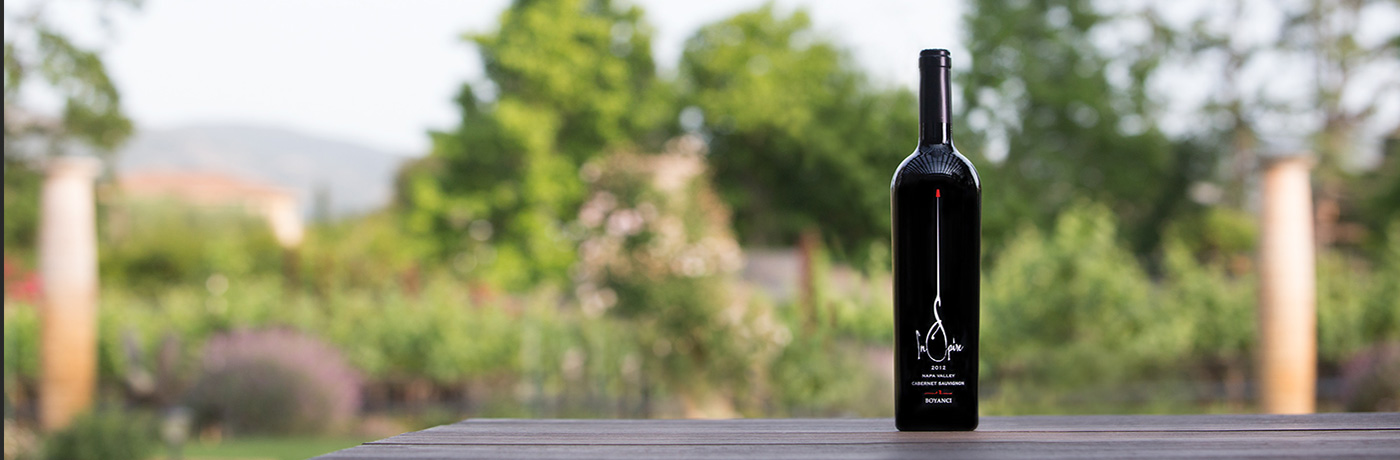
Boyanci Wine - the Best Wine in the World - created in Napa Valley California.

OUR STORY

BE UPLIFTING

ABOUT THE WINE

JOIN MAILING LIST

CONTACT US

PURCHASE WINE

Boyanci Wine - the best tasting wine worldwide.

Our Story

Boyanci Wine - founders of the best tasting wine - Napa Valley California.

What’s in a name?

Our original idea for a brand name was “Absolute passion for creating the best possible wine, lifting the spirits of those who drink it, giving back and tossing aside our perfectly good paying jobs to do all that” but you wouldn’t believe how hard it is to get all of that on a wine label, plus it made us a little dizzy spinning the bottle round and round to read it. After much consideration, we settled on the name Boyanci which not only is the combination of our two last names but sums up all of the above and more.
BOYANCI to us is a lot more than just the combination of our two last names. Boyanci is about buoyancy, formally defined as “the upward force that keeps things afloat”. We believe our wine can uplift any occasion. We define living well as a night of laughter and fun with friends and family sufficiently lubricated by excellent wine. For many years our favorite wines have increased the pleasure and levity of evenings with those we care about and we created Boyanci to do that for others…..well, and we drink it too so……it’s not just for others.

Download Logo

Who We are

“There is nothing like a dream to create the future”
–Victor Hugo

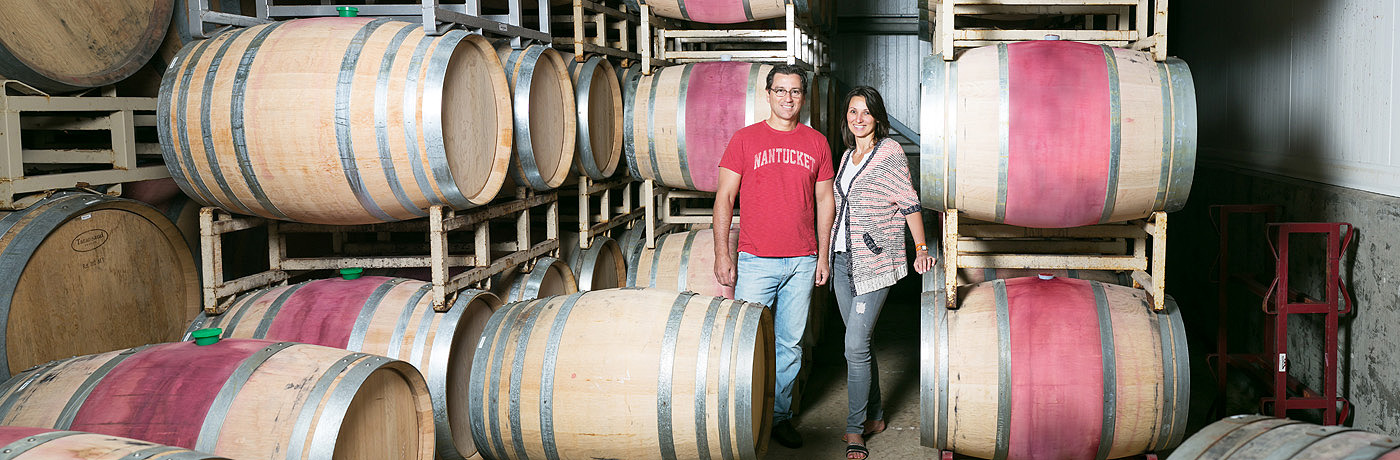
Kevin Boyer and Tom Steffanci met in Napa Valley of all places during a boring corporate meeting. Tom was actually the bureaucrat that called the meeting and Kevin was attending. We stole away to taste at a few other wineries and talked tirelessly about the wines we loved, those we hated and the ones we would someday make if we ever got the chance. We also talked about what we wanted to do to make a difference in the world and how we each thought we just might be able to do something meaningful. A strong friendship followed and after a lot of talking about creating our own wine we finally quit our jobs to launch Boyanci. This spring we will release our first ever vintage of Boyanci and we could not be more excited. The wine is outstanding (see “about the wine” for details). We want to invite you to be among the very first to enjoy it so order your wine now because the 06’ is extremely limited and will sell out quickly.

Kevin BOyer

Boyanci Wine, co-founder of the best tasting wine, Kevin

I caught the “wine bug” very early on in life, and have been around fine wine for as long as I can remember. My first introduction to the fine wine and culinary world occurred through my mother, who owned and operated a marketing company specializing in the demonstration of upscale wine and food products. Sampling was a core part of her business, whether at a retail outlet, outside event or even around our house at cocktail parties, and as such, I had the chance to taste and appreciate some of the best wines in the world at a very early age. Luckily for me, I usually had the chance to hear about the wines from the winemakers and owners themselves as they came out to work events in the market. I also had a chance to see the positive effects that wine can have on people from all walks of life. I distinctly remember spending time with my mother while she would host these events, and it always amazed me to see the different types of people that were fascinated with wine and the amazing feeling my mother would get showing and telling others about the magic of wine. Whether you are an engineer or an artist, a hedonist or traditionalist, a sinner or a saint, wine is a living breathing entity that holds within it something amazing for all.

Knowing my passion for wine and food would only strengthen, I was determined to pursue a career that would allow me to build and apply my wine knowledge in the hopes that eventually I would be able to share that passion with others. From my start as a server of fine wine (sommelier), in which I could work directly with each consumer to share my love of the grape; to my career as a buyer and seller of wines for a group of over 120 global restaurants, in which I was tasked with building wine lists that appealed to a broad range of wine lovers; and culminating with this, my final career, as a producer of fine wines, where I can translate my passions into a bottle of wine for all of you to enjoy; my goal has always remained the same: To enjoy and share all that life and wine has to offer.

I hope in some small way, Boyanci can help do that.

Be Uplifting,
Kevin Boyer

Tom SteffANCI

Boyanci Wine, co-founder of the best tasting wine, Tom.

I have casually enjoyed wine my whole life but it wasn’t until I tasted a 1999 Gaja Conteisa that I became a zealot.

I’ve spent the last 16 years of my life in the alcohol beverage business. It’s been an intoxicating experience (wow that is a bad pun even by my low standards). I started in the beer business and then moved to the spirits industry. I enjoyed beer and spirits and it was fun to sell and market brands like Guinness, Johnnie Walker and Makers Mark but I never became obsessed as a consumer.

I then took a job running a fine wine company that represented some amazing brands including Gaja from Piedmont Italy, Chapoutier from France, Two Hands from Australia, Bollinger Champagne, Rochioli from Russian River and many many more. I dove in head long. What began as a quest to quickly learn as much as I could about the business of fine wine became a passion…..ok perhaps an obsession. I turned my home office into a wine cellar (I could always work at the kitchen table right?). I was fortunate, over several years I tasted with many of the best winemakers in the world on 3 different contents. I snuck off to Napa every free weekend I had and visited wineries, and bought lots of wine adding to my collection. I drank a lot of wine, talked a lot about wine, emailed about wine, dreamt about wine……….well you get the picture.

At the same time I took an interest in volunteer work, particularly volunteer work that benefitted children and supported education. I became a volunteer tutor at a school on the south side of Chicago. Purely by chance I met a women on an airplane who was involved with a charity called Coprodeli www.coprodeli.com. I was impressed with what I heard. I began attending their fund raising events, helping with clothing drives and before I knew it I was in Peru volunteering in schools and orphanages. Much like wine, I got hooked on helping the wonderful but very poor people of Peru.

Tasting that 1999 Gaja Conteisa with Angelo Gaja was an epiphany. The wine was extraordinary and Angelo Gaja and his daughter Gaia are inspirations. I don’t know if the Boyanci wines will ever be as good as the Gaja wines but we will never stop trying to reach that standard.

Boyanci is an opportunity for me to satisfy my two passions for wine and charitable work and do all of that with my best friend. What could be better? Well I guess if the thing turned a profit that would be better but I’m a patient man…………

Cheers,

Tom Steffanci

Be Uplifting

Boyanci Wine, Napa Valley California, be uplifting.

"No person was ever honored for what he received. Honor has been the reward for what he gave."
-Calvin Coolidge

We want to be uplifting in everything we do; I guess that’s why we’ve printed “Be Uplifting” right on our bottle. We are serious about making outstanding wine and helping others in the process. Boyanci is donating 10% of our profits to charity. Admittedly, in the first few years profits will be very limited but we will also be giving our time both here in the US and in Peru, as well as giving our customers opportunities to make donations, volunteer their time and of course buy the wine!

Coprodeli will be the initial recipient of Boyanci’s support. Padre Miguel and his team have worked tirelessly to provide for fundamental needs, education and job training for the very poor. Volunteers from the U.S., Europe, Latin America, provide hope and vital services to those in need. The organization’s impact is amplified by the huge numbers of unpaid volunteers generously donating their time. To learn more visit www.coprodeliusa.org. In the future we will extend our support to additional charities.

There are many ways that you can get involved. In addition to releasing our first ever wine this year, Boyanci is also hosting its first volunteer trip to Peru June 25 – July 3, 2009. Coprodeli staff will be our guides and not only will you be able to see the excellent work they are doing, you will be able to help them do it. See the itinerary here on the Boyanci site and also see Tom’s journal entry written after his first volunteer trip. We promise great wine for those who attend. If you are interested in learning more, please email us, we would love for you to join us.
Being “Uplifting” to others is absolutely central to what Boyanci is about.

Boyanci Wine, Coprodeli USA


BOYANCI / COPRODELI PERU VOLUNTEER TRIP JUNE 25 – JULY 3

Download Peru Trip Info

Group will meet at the Jorge Chavez airport in Lima (transportation provided). Meeting time at the airport is 7:30 AM in front of the Star Peru desk. You will be provided assistance to make your flight connection to Cusco. (Star Peru flight#____ leaving Lima at _AM and arriving in Cusco at _ AM).

You will be greeted at the Cucso Airport by Beatriz from Andean Way Tours and transferred to your hotel. You will be welcomed with some coca leaf tea and then have time to relax at the hotel until pick up for the Cusco City & Ruins Tour. A box lunch will be provided with the City Tour.

CUSCO CITY & RUINS TOUR (on horseback):
Guided visit to the outstanding ruins near Cusco city: the Sun’s Temple “Koricancha”, the Inca fortress Sacsayhuaman, the ceremonial amphitheater Kenko, the strategically located Puca-Pucara, and Tambomachay, the water’s adoration place. Upon return to the city you will visit the cathedral, built on top of Inca Wiracocha’s Palace, and then be transferred back to your hotel. The rest of the day can be spent at your own leisure.

Hotel accommodation provided at Buhos Inn & Breakfast

Note: Dinner not provided.

DAY 2 (Saturday) CUSCO / SACRED VALLEY / AGUAS CALIENTES

THE SACRED VALLEY OF THE INCAS TOUR:
After breakfast at your hotel, you will be picked up by your guide and head to the Sacred Valley in a private van. You will start the guided tour by visiting the town of Pisac and its local Indian Market. Afterwards you will whitewater raft down the Urubamba River and have lunch in the town of Urubamba. Then you will visit the town of Ollantaytambo with its Inca fortress and military observatory. After the tour to the Sacred Valley you will be transferred to the train station and travel to Aguas Calientes, the base town from which you will go up to Machu Picchu. After the 2 hour train ride you will arrive in time to explore the town by yourself or go to the local hot springs.

Hotel accommodation provided at Las Rocas & Breakfast

Note: Dinner provided

DAY 3 (Sunday) MACHU PICHU / CUSCO

MACHU PICCHU TOUR:
You will have an early morning breakfast at your hotel and then be transferred to the bust station to take the first bus to Machu Pichu at 6:30 AM. (You will leave your luggage locked in hotel baggage storage for the day. Machu Picchu is a 20 minute ride uphill. It is probable that the sun may have already risen by 6:30 AM, so your guide will try and reserve a bus that leaves Aguas Calientes earlier, and contact you if this is possible.) This early entrance to the citadel of Machu Picchu will let you watch the ruins without many other tourists around. You will have a guided tour of the ruins in the morning, and then a prolonged stay in the afternoon to enjoy the other hiking options around Machu Picchu or to just enjoy yourself at the ruins. You will be responsible for taking your own bus down to Aguas Calientes (they leave roughly every 5 minutes) and getting back to the hotel. You will be transferred from your hotel to the train station to take the train that leaves to Cusco at 2:30 PM. Please make sure you allow enough time to get back to the hotel if you choose one of the hiking options around Machu Picchu! Lunch is included.

Note: It is a good idea to bring a bottle of water, sunscreen, mosquito repellant and some fruit up to Machu Picchu with you. Dinner not provided.

Also note:
• During your visit to Machu Picchu remember that if you leave the site without any notice and want to reenter you must pay the entrance fee ($20). Please let the entrance supervisor know that you are leaving and will return soon (they track all entrances into the park.)
• If you climb the Huayna Picchu, be very careful and plan your time accordingly. The track is steep, has deep drop offs and may be slippery. DO NOT hike if it is raining.

DAY 4 (Monday) CUSCO / LIMA

After breakfast at your hotel you will be transferred to the airport in Cusco to board your flight back to Lima. You will be provided assistance to make your flight connection to Lima. (Star Peru flight # ____ leaving at _ AM and arriving in Lima at _ PM). Be prepared to pay a small departure tax at the Cusco airport (in USD or soles). You will be met at the Lima airport by a Coprodeli representative and transferred to the Coprodeli volunteer house.

Price includes:
• Domestic flight Lima – Cusco – Lima
• Transfers in Cusco: airport/hotel/airport, hotel/train/hotel
• Accommodation on double room basis
• Meals as detailed in the itinerary
• Official bi-lingual guides on all tours
• Entrance fees to tourist areas
• Tourist coach (train) to and from Machu Picchu

Price does not include:
• Airport taxes
• Meals not detailed in the itinerary
• Personal expenses, tips

Items to bring for Cusco Excursion:
• Shower sandals
• Swimming suit (towels will be provided)
• Wet shoes for rafting trip (sandals that clasp around the ankles)
• Sun block
• Mosquito Repellant
• Long pants
• Sturdy shoes for hiking and horse back riding

Special Note: Please have cash for airport departure taxes when leaving the Lima airport and the Cusco airport

Journal Entry

September 6, 2008

I literally just returned from 9 days in Peru. I’m not sure who I am writing this to or why but I feel compelled to write so here goes……………..

There were 13 volunteers on the trip, some came with a couple of friends and others like me knew no on one on the trip. The purpose of the trip was to volunteer, to help and to get some sense of how the poor families in Peru live. The group first spent a few days doing tourist excursions, the highlight of which was Machu Picchu. We then arrived at the volunteer house in a poor area of Callao where we spent 4 nights in very modest accommodations, sharing bedrooms, bathrooms and precious limited hot water. The experience was profound and exceedingly more impactful then I could ever have imagined. To a person, every volunteer was touched and perhaps even changed by the experience. We were a random bunch brought together by some common interest and the very diverse and initially disconnected group left with a unique shared experience that none will ever forget. We are now friends, some quite close friends and share a bond. If the others feel as I do, and some how I know they do, they are already longing to return. Longing to again feel truly useful, needed, fulfilled and just comfortable in your own skin. What the hell happened there you ask? First a bit of background……….

Coprodeli (Communion, Promotion, Development and Liberation) is a charitable organization founded by Padre Miguel Ranera a Catholic missionary priest from Spain. In 1989 Padre Miguel and his team created the Coprodeli Foundation and concentrated their efforts in the 30 barrios in Callao where nearly 90% of the population live in extreme poverty. The aim or the organization is simple: satisfy the basic needs of the poorest families and particularly the children in Calleo.

Since Coprodeli’s inception extraordinary things have been achieved: 9 schools have been built in Calleo and are run by Coprodeli. They teach 5,000 students and serve others through a program for “high risk” children. There other programs include Preventive health programs, employment development, habitat programs, earthquake reconstruction, pastoral support, orphanages, home construction, venture capital for new businesses and much much more. Coprodeli has 300 employees in Peru and another 300 volunteers. The US (most of which is concentrated in Chicago) and Spain arms of the organization are also very strong and a great deal of volunteers and donations come from those two countries.

The man who started all of this and presides over it today is Padre Miguel as he is known. He is an amazing man. He is one part teacher, one part CEO and one part Priest. This triple-talent of a man is an absolute inspiration. I had the privilege to dine with him twice, jog with him once and tour around with him twice. He is focused, strategic, smart, free-market oriented, business minded, humble, playful, impatient and most apparent of all passionate. The seminal moment for me was when I asked Padre Miguel, “you must be very proud of all that you have accomplished”, he said, with fists in the air and in a thunderous voice “These are my children, I am their Popi and I am very proud of the opportunity we have created for them, very proud!” The Padre is only just getting started, his army of volunteers will continue to grow as others will get the privilege to work with him and they will get committed and they will help because his passion is absolutely contagious.

The Padre started it all with the schools and the schools are a wonderful success story. The schools work, I mean they really work. I volunteered in 3 of them, all in Pachacutec, a shantytown of 100,000 people where 65% of the population earns less than $200 per year. The students there were dressed smartly in stylish uniforms; they were clean, well behaved and enthusiastic. They did not seem impoverished and they certainly were not sad. The school accepts the best and brightest from Pachacutec and conducts a selection process based on testing to choose attendees given that the spots available are far exceeded by the number of children. The rest go to public school.

The school is funded by Coprodeli and the Peruvian government but they require parents to volunteer hours at the school as a form of payment. The program is disciplined; the teachers are sharp and firm but at the same time loving. The kids, oh my goodness the kids are amazing! I still get goose bumps thinking about their faces. They light up when you come into the room. They sing songs together and then they listen intently to your direction and work hard to fulfill the remit. There eyes are as full of hope and optimism as any child you would meet in the US.

Our main volunteer activity was taking over 3 classes a day for 90 minutes each and teaching the children. We split our group of 13 volunteers into 3 groups of 4-5 people so we could teach 3 classes at the same time. We were given a lot of flexibility on what we wanted to teach and which grades to teach. Given our lack of fluent Spanish, we chose younger children and focused on an art project to teach the children the English language names of common animals and then let them create pictures and/or sculptures of those animals. We planned in advance and brought lots of art supplies so the kids had plenty of options to satisfy their creative inspiration. How did it go? Amazing! Were we effective teachers? Sometimes yes and other times it was a bit chaotic but the children loved it. I don’t mean that they were interested, I mean they were ecstatic! There was one exception but that is a story for another day. At the end of the class they kissed, hugged us, thanked us and a couple of times literally tackled us. These kids smiled so brightly that they lit up the room. The language barrier forced careful concentration on facial expressions and gestures and created a connectivity that I had never experienced before and certainly not with children that I did not even know. How did the other 2 groups make out? By all accounts even better, they chose different very creative projects but had the same great experience. At the end of each day the volunteers were all abuzz with inspiring stories, hilarious photos and best of all the big bright smiles of the children spread like wildfire to the volunteers. Even the most reserved of the bunch gushed with passion about what they had experienced and observed.

The same electricity was felt during our 3 visits to the orphanages run by Coprodeli. These did not even seem like orphanages. The buildings were like large but modest homes and the children occupied bunk beds in various rooms. They were extremely affectionate and really appreciated the “goodie bags” of toys that we brought to each of them. The environment there was regimented in terms of schedule but the kids were allowed to be kids and play and creativity was encouraged. Many of these children are not orphans in the way that we in the US think of orphans. Many had parents that loved and cared about them but just simply could not afford to care for them. It was obvious some of the children had been through unimaginable hardship but the presence of other children and the loose, easy atmosphere seemed to sooth them. They craved our attention and worked hard to communicate with us despite our very limited Spanish.

The third activity that we participated in was called outreach. Outreach involved joining the Compredeli staff members in small groups as they visited houses in the shantytown of Pachacutec. The aim of the visits was to update records on family names, size and most importantly needs. A receipt was created after the family answers a series of questions and the family could then take the receipt to a Copredeli school and exchange it for cloths, food and the like.

Outreach was a surreal experience. It was the most sadness that I felt during my visit to Peru. It is impossible to explain Pachacutec and even the many pictures I have taken don’t really capture its essence. This is a mess of a place. Tiny shanty houses dot the landscape in every direction. They are poorly constructed and stacked one against the other as they meander off into the distance with no sense of symmetry or order. Picture the kind of “fort” that you built out of leftover scraps of wood, branches and cardboard when you were 12 years old and you might get some image of what these edifices looked like. They have thin wood and sometimes cardboard walls. Some have corrugated roofs, while others have plastic pulled across wood frames. Many have dirt floors and none have running water. This hodge podge of poorly constructed boxes goes on seemingly forever. There are 100,000 people living in these houses, well they are not houses but in these boxes and there are probably 25,000 of them strewn across the desolate hills of dirt and mud. There is no grass, no trees and hardly any paved roads. Just dirt, a lot of trash everywhere and packs of mangy dogs roaming about. The dogs seem like much more fitting inhabitants for this environment then do the families. It was grey each day. The pollution and the inversion layer mix together to create a dense grayish yellow fog that dulls the glow of the sun and creates a sad but fitting backdrop for what is a melancholy place. It seems impossible that these bright, clean, well dressed and optimistic kids emerge from these ramshackle boxes each day and attend the Coprodeli school but they do.

Outreach begins with the Coprodeli staff knocking on doors and we were then invited in and we observed the question and answers and looked on in shock at the interiors of these boxes. Most were about 400 square feet, usually with at least 5 inhabitants. The bathroom consisted of a hole in the ground in the backyard with a bucket of water next to it. Beds were often mattresses on the floor. We were surprised to hear the ages of the men and especially the women that lived there. Often times they looked ten years older than they were. Pachacutec is a hard place and the years their leave their mark. Each visit was a sad and sobering reminder of what a different set of cards these Peruvians were dealt versus advantages most Americans are born with.

Only one of the visits brought me to tears. We will call her Jenny. Jenny is 15 years old and lives with her two younger bothers (ll and 4 years old). Jenny’s Mom died last year and her father left when she was very young. She has a 17 year old sister who has moved to Lima to try to earn money for the family leaving Jenny as the default parent. She can not go to school because she must take care of her siblings. She can not work because there is no one to watch her 2 brothers. I stood in that 300 square foot “fort” and I starred at the gaping holes in the rusted roof and I just thought “how the fuck is this acceptable?”. Why has this girl been put in this situation? She didn’t deserve this, didn’t choose this, and can’t change it. It’s not right.

She was stoic. Her eyes hard and emotionless. She listened to the staff members as they explained how they could help and she made an appointment to come pick-up some donations. At my request, they asked her what she needed most and she said a new roof and a back door that locks so people don’t come steal from me anymore. After speaking to the staff I offered to pay for a new roof and the door to be installed. The staff told her and she quietly and without any emotion thanked us. Jenny was not prone to the fickle emotional outburst and the high and low showing of emotion that most of us exhibit. She could not afford to “feel” that. She had found a way to survive in impossible circumstances and part of that for her was not allowing the good or the bad to move her much in either direction. We saw her later that day back at the school and we helped her pick out cloths and took a photo with her. She exhibited the same aloofness. She was a survivor and tough as nails. While I respected that, at the same time I longed for her to feel and show the same joy and jubilation that the 5 year old kindergarten class showed as they cheered, laughed and sang earlier that same day. Perhaps she was one of those children 10 years ago but now her circumstance required a very different disposition.

That night back at the volunteer house it rained hard. The volunteer house roof leaked and water dripped into a couple of rooms. All I could think about was Jenny and her two brothers. The water must have been pouring into her home through the holes that dotted her entire roof. The few clothes and bedding she had would be wet, mildewed and miserable. On Monday, the leaking roof will be replaced but she will still be dealing with many other hardships.

I will return to Peru and to Pachacutec and perhaps even to see Jenny. I felt whole there. I slept soundly, I smiled constantly, my days had real purpose and life was unambiguous and the mission clear. I didn’t miss very much about my seemingly much more comfortable life back in Chicago with my big job and cushy condo. I’m going to figure out how I can get more involved, do more, give more and solve more. I want to inspire my friends and family to experience what I have experienced. The trip was as much about self help as about helping others. I hope you (who ever “you” are) will do the same and try to get your family and friends involved.

We live in a cynical society. Often times those telling stories about being moved by service work can be dismissed as self-ingratiating or cliché. Don’t pay attention to that bullshit. You can’t help or save everyone but you can help someone even if it is just to make sure that she has the dignity of sleeping in a dry bed.

Love without limits.

Cheers,

Tom Steffanci

About the Wine

Boyanci Wine, Napa Valley California, the best tasting wine worldwide.

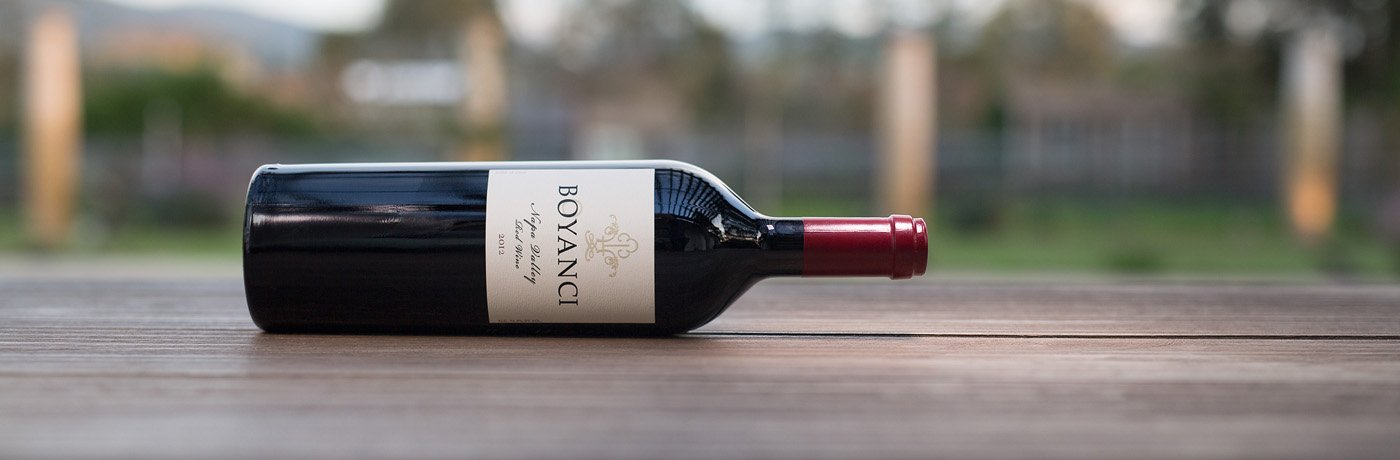
The 2006 Boyanci red blend is our inaugural vintage and we are extremely happy with the quality and style of the wine. The nose is wide open with ripe fruit aromas of blackberry, cherry, and light chocolate. Explosive flavors in the mouth of beautiful ripe fruit similar to the aromas, a rich lush mouth feel and amazing length. The tannins are well integrated and the wine has a solid backbone and excellent structure.

PRODUCTION: 360 six bottle cases, packed in wood boxes

VARIETALS: 61% Cabernet Sauvignon, 18% Syrah, 13% Petite Verdot, 5% Merlot, 3% Cabernet Franc

NAPA VINEYARDS: Pritchard Hill Vineyard, St Helena Vineyard, Barbour Vineyard

OAK: 60% new French oak, 40% 1 year old French oak, Taranssaud, Gamba and Radoux cooperages, 17 months in barrel
pH: 3.68
ACID: 57

ALCOHOL: 14.9%

Download Wine Specs

Philosophy

We are committed to producing outstanding and consistent wines vintage after vintage. Our wines must exhibit outstanding balance and integration. Our 2006 BOYANCI will compliment a variety of cuisines but will also be elegant enough to enjoy without food. BOYANCI wines will be approachable and balanced in their youth, and will only improve with cellar aging.

We are truly blessed to be making wine in Napa Valley. The climate, soil and topography are ideal for growing a wide variety of wine grapes. Winemakers and viticulturists in Napa have been sharing their best practices with one another for 30 years and those learnings are being applied to BOYANCI’s wines. Most importantly though is the freedom with which we have to make wine without limitations. Unlike France and Italy, in Napa we can choose to blend together any combination of grapes that we believe will enhance the quality of the wine in a given vintage. Our red blend is our top wine and is the best wine that we at Boyanci can create. Our red blend is not a static recipe, and as such, we will continue to adjust the blend yearly based on the best grapes that Mother Nature gives us to work with each vintage.

Our goal is to create a wine that brings together classic Napa Valley strength and extraction with Bordeaux like elegance. The vast majority of our blend is Cabernet Sauvignon (61%), farmed at high altitudes in the famed Pritchard Hill area of Napa Valley, known for its lush, concentrated fruit character and dense tannin structure. We round out the blend with Syrah (18%), Petite Verdot (13%), Merlot (5%) and Cabernet Franc (3%), all sourced from prime vineyards located in the St Helena AVA. It is the addition of Syrah to soften the youthful tannins in the Pritchard Hill Cabernet is what makes the 2006 BOYANCI truly a unique and wonderful wine.

While our blend will change each year, our commitment to only sourcing grapes from the very best vineyards will not. Enjoy the wine. May it bring you levity, cheer and buoyancy.

Join Mailing List

Order the best tasting wines available today!

In order to receive an allocation of Boyanci you must join the mailing list. The inaugural vintage of 2006 is extremely limited and allocations will be provided on a first come first serve basis. We cannot guarantee that you will be allocated any wine if you join the mailing list after January 15th because at that point we will begin allocating wine to top restaurants and fine wine shops so please sign-up now. Don’t worry, we will not give your information to anyone else and we will send no more than 4 email communications per year, likely less. Once we complete the allocations you will receive an email with an order form which you will need to complete and fax back.

Contact Us

Boyanci Wine vineyards in Napa Valley California, creating the best wines Nationwide.

135 Camino Dorado Suite12
Napa, CA 94558
Phone: (707) 255-7800
Fax: (707)-260-6000

Purchase Wine

The best Red blend wine created in Napa Valley California

TO PURCHASE BOYANCI WINE YOU MUST FIRST JOIN THE MAILING LIST.
The Boyanci Red Blend vintage 2006 is $110 per bottle plus shipping (for example shipping to New York would be approximately $26) or $627 per six pack (a 5% discount for buying a 6pk) plus shipping.

Due to the very limited quantities we ask that you join the mailing list so we can send you an offer letter and an allocation of wine.  We apologize for any inconvenience.  The inaugural vintage of 2006 is extremely limited and allocations will be provided to those on the mailing list on a first come first serve basis. Once we complete allocations to our mailing list customers we will begin allocating wine to select restaurants and fine wine shops so please sign-up now.  Don’t worry, we will not give your information to anyone else and we will send no more than 4 email communications per year, likely less.  You will receive an email or letter with an order and the opportunity to buy a maximum of six bottles.